Late August/Early September, 2026
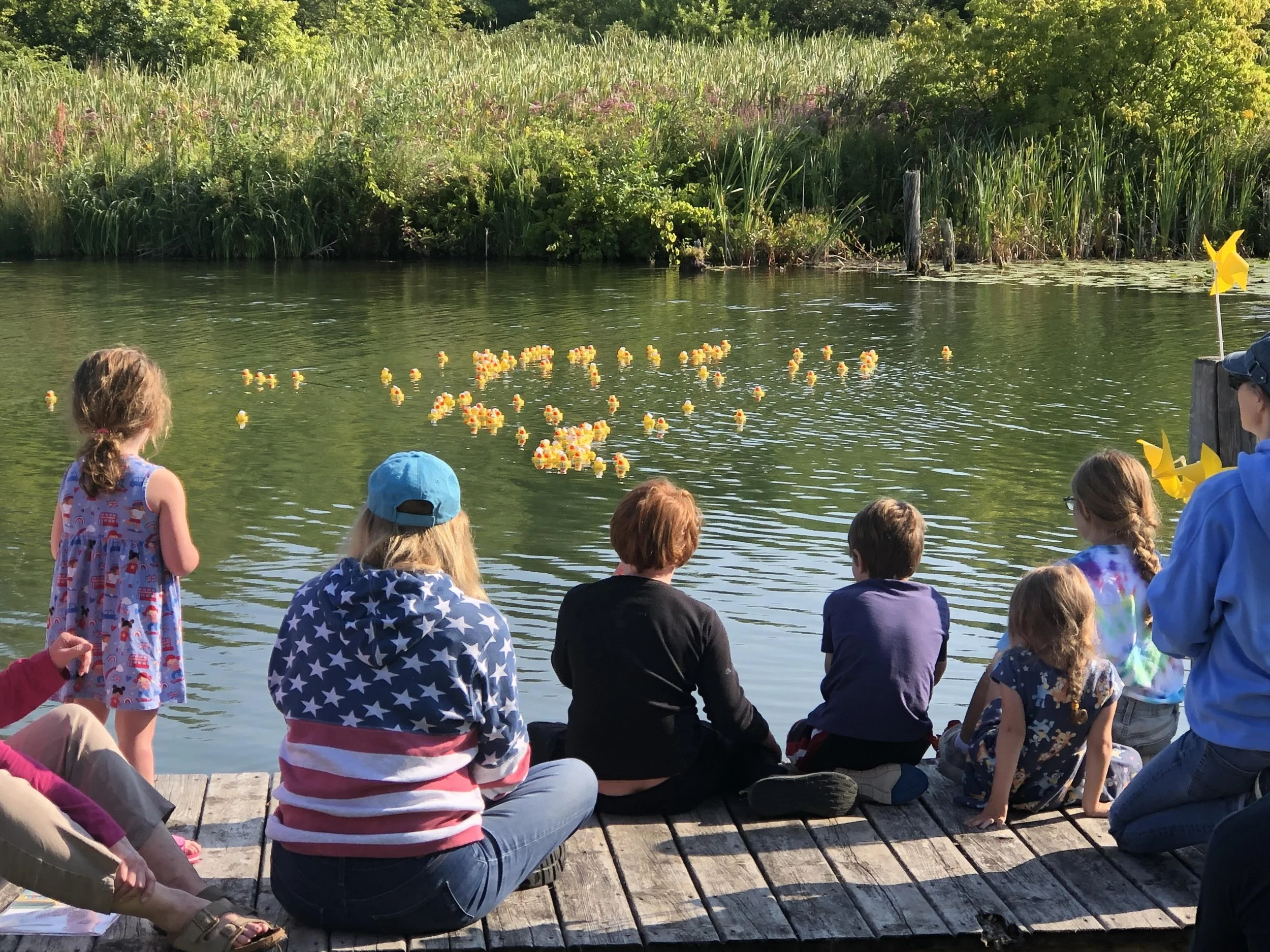
Can you recall the first Leelanau County bridge walks? I can. The common thought was that they were kind of fun, but unlikely to stay around.
Well, they’re still here, and judging by the enthusiasm level in 2025 (photo above from the Lake Leelanau walk), they’re here to stay.
The walks represent super-mini versions of the original Mackinac Bridge event led by the governor. Participants in Lake Leelanau will step off at 9 a.m. at the Narrows, with singing and the Narrows Duck Derby to follow, with proceeds benefiting the Lake Leelanau Community Association. Expect walkers to begin gathering at 11:30 a.m. for the Mighty Leland Bridge Walk, which steps off at noon.
Labor Day, then quiet transition
Late August/Early September, 2026
Provided by Alan Campbell
Leelanau Commissioner Update
District No. 5 (Leland and Centerville Townships)
Thank you for opening the Leelanau Commissioner newsletter or visiting the leelanaucommissioner.com website.
It’s been a busy time for Leelanau County government as the 2027 budget process moves into high gear. In this edition, you’ll find facts, thoughts and views on our budget workshops, the floating of a hiring freeze and a commentary on the number of closed sessions commissioners have held.
The fourth story offers synopses on a suggestion to rely on subcommittees to advance the work of the County Board, an update on the Ethics Committee, audit process views, and two items on the agenda of our executive board meeting next week.
If you know of someone interested in receiving this monthly report, please forward this email to them so that they might subscribe. I will not share email addresses, and it’s simple to unsubscribe.
Past newsletters and documents of importance can be found at leelanaucommissioner.com.
My goal with this newsletter is simple: To make the work of the County Board of Commissioners transparent. Feedback is welcome through a link on this newsletter or by calling me at 231-492-4972. I enjoy our conversations.
Thank you.
Alan Campbell
September fun does not include budgeting
September 4th 2026
Leelanau County offers a full slate of fun times in September — prep football, festivals, and salmon fishing and hunting, to list a few. And then comes October leaf peeping.
Oops. Forgot one. Budget writing.
While you might join me in naming autumn as my favorite season, budget writing likely won’t rise to the top of our “happy things to do” list. But for county commissioners, right now it’s our biggest job.
So a few of my favorite activities are taking a back seat.
This is my second annual saunter down the budget road, and I have to say it’s been a bit less stressful than my first. Of course, that could and probably will change when it comes down to crunch time — when decisions are required to keep county finances out of the red.
That’s where the 2027 budget is now, even with the exclusion of projects that should not be put off. Included are expensive monitoring of a crack and surface deterioration at the Leland dam, and the purchase of encrypted radios for emergency services as required by the federal government. The total emergency radio cost could hit $1 million, a portion of which will be shared with local fire authorities.
Also, health care costs continue to rise far beyond the rate of inflation.
I appreciate the openness and willingness to share information shown by our department heads, county-wide elected officials, and especially by interim administrator Lauren Cypher and finance director Rio Risbridger, along with her department. When I’ve asked to have the stories behind the numbers in my three-inch-thick budget binder explained, unbiased answers have been forthcoming.
So what’s in that binder, which represents preliminary figures for our 2027 budget? Some of the storylines I’ve been following include:
• My eye tends to skip the first lines of any financial statement in favor of drifting down to the bottom line. Are we in the black or red with revenue versus expenses? That’s not a good practice with the county budget because the first line holds the answer for which I’m searching.
That line reads “Fund Balance Forward,” which always equals the exact shortfall between proposed revenues and expenditures.
The red line when we started the process was $461,754.
Note to self (and constituents): it’s easy for a financially healthy county — or household, for that matter — to balance a budget if a savings account is used as income. The goal is to have a truly balanced budget.
• The bottom line on department expenditure requests appears reasonable considering that 4% raises established in labor contracts were baked into the budget. Total expenditures sit at $18.5 million. That’s an increase of just one-half of 1% from the current budget. However, the number is somewhat deceiving in that the budget is bare-bones in nature by leaving out capital expenditures commissioners and staff know are required in 2027. But I’d rather add than subtract expenditures from the preliminary budget, so the $18.5 million number is a good place to start.
• Revenues ... could be a problem. After subtracting the fund balance forward — which is actually make-believe revenue — they are listed at a little over $18 million. That’s not enough to keep all the lights on.
But I’m learning of nuances within the revenue side of the ledger. For instance, no income was shown for a state Sheriff’s Office road patrol grant because budget discussions in Lansing were less than reliable. Turned out that more funds were allocated than in previous years. The county received $66,672 in 2025 according to that year’s audit.
• The wild cards are many.
We’ve been informed that health care expenses in the 2026 budget will likely exceed the $2.6 million anticipated, despite requiring employees to pay more into the program. Health care may cost $3 million next year, an amount higher than baked into the proposed 2027 budget at this time.
Also, the county has moved into a more conservative formula for projecting property tax revenue after learning that the 2026 budget may have been a bit aggressive. Consequently, property tax revenue is projected at $14,243,794, which represents an increase of less than 2%. Will that estimate be low or high?
The budget contains a contingency fund of $400,000. When we approved the property tax rate in May, I requested through an amendment to the motion that an additional $200,000 be budgeted for contingency — doubling the line item from the current budget. Will we as commissioners pull from Contingency to pay for projects needed in 2027? I hope not, as my belief is that the fund is meant for unanticipated expenses.
The leasing vs. buying of vehicles discussion was presented to commissioners in 2025 as a cost-saving measure. Our finance department has worked the numbers and found that leasing will actually be more expensive. With that information, I’m now under the impression that leasing was presented as a budget-balancing rather than a cost-saving measure. Given our tight budget expectations, should the county continue to lease, moving from an asset-based to a pay-as-you-go fleet? Or should we think more long-term and move back to purchasing vehicles?
The budget process is also a learning process, giving commissioners and staff opportunities to dig deeper into our priorities and plans for the future. I think that aspect of budgeting is going well.
I hope I didn’t ruin a perfectly fine September day with all these numbers. A gold star to those of you who read to the end.
Commissioner note:
The County Board has a full slate of budget hearings coming up, and you’re invited to join in the fun! I guess that’s a bit overenthusiastic. But seriously, please consider adding your voice to county budgeting decisions. Unfortunately, most hearings have had virtually zero attendance, which would make your voice louder without raising it.
Hearings in September are scheduled for Tuesday, Sept. 8, following our executive session; Sept. 15 after the Brownfield Authority meeting (around noon); and 9:30 a.m. on Sept. 22 for what is being termed a “budget realignment” session. Expect important decisions to be made.
A tentative session has been set for Sept. 29, if needed.
Please consider emailing (updates@leelanaucommissioner.com) or calling (231 492-4972) me with your suggestions on the 2027 County budget.
Needed: more public comment and openness
September 4th 2026
When recounting the impact of you, the residents of Leelanau, on the outcomes of County Board meetings and hearings over the past many months, two things stand out.
They are public comment periods and the board’s many discussions in closed sessions that never see daylight.
I’ve witnessed and many times participated in public comment through most of my adult life, but not until the past 20 months from the front of the meeting room. Your thoughts can be the most powerful part of a meeting. Please know that your words have impact.
Commissioners are obligated to listen and keep our mouths shut. Listening is a lost commodity in the charged world of governing and politics. Whether I agree or disagree with comments made, the majority of speakers have conducted themselves with a level of respect, if not held for individual commissioners, than for the office they hold.
We’re privileged to live in a county that conducts itself in such a manner.
Now about the closed sessions.
I find myself conflicted because they obliterate the public’s role as watchdogs over the people they put in office. Yet there are times when they are needed.
For instance, when discussing union grievances. There have been too many.
Or when being advised by or when giving direction to an attorney over lawsuits.
Or, more recently, in working through an attorney toward a smooth transition in the separation of our former administrator from his job responsibilities and eventually county employment.
So what happens behind those closed doors?
I can only speak in general terms, as dictated by the same state Open Meetings Act law that allows exceptions under specific circumstances for commissioners to hasten into a meeting room shielded from the public. The county clerk or her representative is required to be present to take minutes that are not released to constituents except through court order.
The most common OMA exception, I’ve found, falls under the umbrella of “attorney-client privilege.” That’s often a document written by the county attorney, and usually the attorney appears in person or through a phone call streaming from a speaker on the table that could have been taken from a decades-old Star Wars set.
Or maybe it resembles a white spider. Take my word, it looks weird. Regardless, it provides a fairly efficient mode of communication.
Then we read, if necessary, and talk. Some talk more than others — I’ve been accused of such and hereby fall on the sword — but eventually we all get our words in.
I liken the process to a jury deliberating without taking a vote. By the time we move back into official business, we pretty much know where everyone stands. Perhaps the attorney has written a motion that represents an outcome of what was discussed.
Regardless, the attorney has a better understanding of our limits in the role of representing taxpayers in civil lawsuits and union grievance settlements.
We’ve had a slew of justified reasons for meeting behind closed doors. More than I recall being needed by past boards.
Given my background as someone trying to keep tabs on local government, it’s probably no surprise that I’m disappointed at all the closed sessions we’ve held.
When appropriate, I motion to get attorney documents released to give constituents the same information privy to commissioners. Such was the case at our June meeting, when the County Board voted to make available an opinion on a proposed policy change that would have empowered the county administrator to award settlements up to $25,000 without board approval or immediate notice. That was one time I wish I had voted against the closed meeting motion.
There may have been a legal justification to keep the public out, but that doesn’t always constitute a good reason.
Here’s to more public comment and fewer meetings closed to constituents.
Hiring freeze vs. workforce makeover
September 4th 2026
Some commissioners are pushing to institute a hiring freeze within county government. I’m listening, but so far I’m not on board.
That might appear inconsistent from a commissioner with a bent for conservative fiscal policy. Let me explain.
The idea sprang from one commissioner and gained favor with others. He brought up the thought in August as we were entering our budget writing calendar, and reiterated the need at our Sept. 1 budget hearing.
I’m not in total disagreement. The previous Leelanau County Board, which left office on Dec. 31, 2024, had negotiated new union contracts that were not ratified by union members until a few days after commissioners now in office took their seats. The contracts covered unionized workers in the county building.
While wage increases were a mainstay of the contracts, the biggest effect on county fiscal resources was an increase in the work week from 35 to 40 hours.
None of those extra hours had been budgeted. And to this day, no accounting has been done to compare how the extra hours might affect county staffing levels, considering that the workload was unchanged.
So the concept of reviewing staffing needs makes sense.
However, it’s my belief that simply not filling positions as they open represents a haphazard way of right-sizing the county’s workforce to represent a 40-hour work week.
The effect would be to reduce staffing for departments with older associates nearing retirement or with mobile associates looking to move ahead faster than the county can accommodate.
I also recall, with regret, a hiring freeze instituted nearly one year ago for reasons that are still unclear to me. I voted against the freeze as we had no serious intentions at the time of reducing staff levels, or at least none were articulated.
Finance was the only department seriously affected. Finance director Catherine Hartesvelt was in the process of hiring a clerk for a budgeted but unfilled position. The candidate couldn’t wait, the position stayed vacant, and Ms. Hartesvelt was fired within two months by the administrator. Only recently has stability returned.
One alternative to a hiring freeze would be to turn the extra hours being worked into the equivalence of full-time positions, then ask the interim administrator, department heads and county-wide elected officials to come up with recommendations for scaling back staff to the level of work required. I would also like to consider “sharing” employees among departments whose workload schedules are uneven — seasonally, monthly or weekly.
The culmination of the process would likely result in a need to reduce staffing. By planning ahead, perhaps we can accomplish that goal through attrition rather than layoffs.
Such would be a challenging road to follow, and require everyone, top to bottom, to work as one. While I realize and anticipate that bosses will defend their turfs, I believe they can also see the bigger picture when presented in accurate terms.
The bottom line, as I look back, is that I support a complex and targeted hiring freeze that leads to a more flexible workforce.
Potpourri of County Business
Are subcommittees a Subpar way to govern?
September 4th 2026
The headline is silly, I know. The answer lies in the makeup of committees and their assignments. Some meet to achieve tangible results; others just meet.
The County Board had as a recent agenda the topic of allocating certain assignments to committees as a way to achieve more in quicker fashion. The premise is that we’ve got a lot on our plate, and only by allocating the workload can we stay ahead.
The consensus among commissioners was that allocating responsibilities to committees rather than handling them as a committee of the whole would result in inefficiency as opposed to faster progress.
That’s the same conclusion I gathered at a Northern Michigan Counties Association meeting held in Roscommon on Aug. 17. I quizzed four commissioners whom I respect from separate counties, and learned that they had been part of committee efforts in the past and found them to be a waste of time.
Back in Leelanau County, one point made was well taken by commissioners. We’ve got much to do, so scheduling “meetings of the whole” may be required to stay even with our workload after we finish up the budget process.
I do recall attending Leelanau meetings 20 and more years ago at which committees of two or three County Board members met on a variety of topics — finance, personnel, emergency services. Committee members came back with suggestions that were as often rejected as embraced. Part of the difference in opinions was a lack of meaningful communication to place all commissioners at the same point in the learning curve before votes were taken.
One committee is chugging along
I am happy to report that the Ethics Policy Committee is making steady progress toward presenting commissioners with the county’s first policy on the topic. Joining me on the committee are County Board chair Steve Yoder and commissioner Gwenne Allgaier. I have the privilege of serving as chair.
Leelanau County presently has only a narrow Conflict of Interest policy that discusses only financial entanglements that might involve county officials. While acceptable for its time — the policy was written in 2005 and last updated 13 years ago — it has been surpassed by a far-reaching policy in Grand Traverse County and an ethics ordinance approved by City of Traverse City voters.
I understand the reasoning behind a media account that connected the work of the Ethics Committee with actions of former county administrator Jim Dyer that came into question. I also want to stress that I began discussing with others the shallowness of the Leelanau conflict of interest policy before I was elected to office. Creation of the Ethics Policy Committee was a unanimous decision by the County Board, and Mr. Dyer was a supporter and valuable contributor to the committee’s work.
The time had simply come for creation of a Leelanau ethics policy.
Committee members had hoped to wrap up work at our last meeting held Monday, Aug. 31, but as often happens, a number of technical questions arose. Some were forwarded to the County attorney for review. We fully expect to recommend and place the proposal before the full County Board in October.
A-plus for audit, but what does that mean?
Rarely does a public body squawk about getting a positive audit, but a few eyebrows were raised about the process used to audit the books of county government and the road commission. The County Board took bids and switched auditing firms for the 2025 audit, but concerns expressed by the county finance director and treasurer matched what I learned through a phone call placed to the manager of the Road Commission.
Stones weren’t turned over in the process, especially when compared to the extensive nature of audits compiled by the county’s long-time auditing firm of Rehmann. County Finance Director Rio Risbridger spoke at a board meeting about a lack of thoroughness, which is what I heard from the Road Commission.
I was more critical of the audit process than other commissioners.
We held the discussion at our Aug. 18 meeting. While no motion was taken for or against exercising the county’s second-year option in a three-year contract, we did direct interim administrator Lauren Cypher, chair Yoder and director Risbridger to meet with representatives of Clark Schaefer Hackett to address concerns expressed at the meeting.
On the agenda: drains and whistleblower opinion
Our next Executive Board session promises to be eventful.
Among several items on the published agenda is a report from Drain Commissioner Chet Janik, and possible release of our legal counsel’s opinion that culminated the Whistleblower complaint filed against our former administrator.
I had asked to put the attorney’s opinion on the August agenda, but it was removed prior to the meeting. Unfortunately, I may have surprised other commissioners when offering an amendment at the meeting to release the attorney’s opinion. That was not my intent.
Commissioners in June held no public discussion prior to a unanimous decision to place administrator Jim Dyer on administrative leave. However, we did thoroughly discuss our options at a closed session, which is allowed through the Michigan Open Meetings Act when reviewing an attorney-client document.
I believe our decision was largely based on the research and opinion provided by attorney Matt Nordfjord that assessed the level of liability faced by the county. Public officials face distrust when withholding public documents and shutting constituents out of the governing process. I trust that my colleagues hold that same view, and will vote to release the opinion. Government should work openly, especially when public funding is at stake.
The issue of drainage districts has gained traction in Leelanau County as residents have looked deeper into the history behind district formation and the ensuing costs passed on to them.
Commissioners will hear a request to contribute $30,000 from general fund monies to one particular district due to verbal promises made earlier this year by a former drain commissioner and former county administrator.
State law creates a wall between county government and the offices of drain commissioners. While county boards set the salaries of drain commissioners, they have no authority over the formation of drainage districts, the costs assessed within those districts or the collection of assessments from property owners.
The executive board meeting will begin at 9:30 a.m. Tuesday, Sept. 8, in the county governmental center.
Please comment, attend
Please plan to attend one of our regularly scheduled meetings. And consider contacting me through the leelanaucommissioner.com website or by calling my cell at 231 492 4972.
Content published on the Leelanau Commissioner Newsletter will become part of Leelanau Commissioner Alan Campbell’s website. Please visit at leelanaucommissioner.com.
